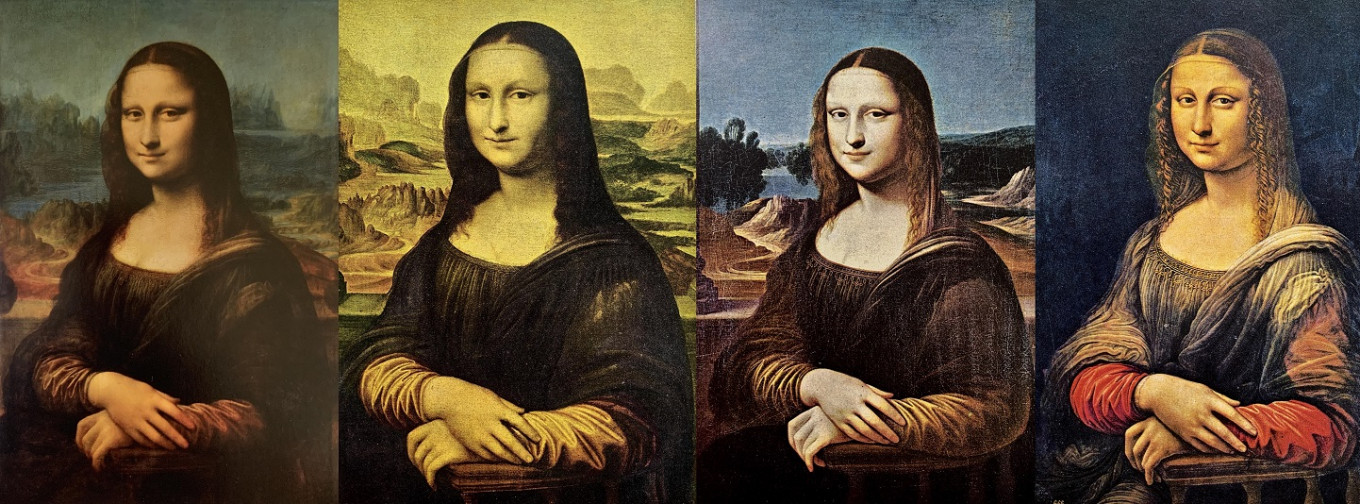

The versions Mona Lisa topic has fascinated historians, artists, researchers, and the general public for centuries. Leonardo da Vinci’s Mona Lisa is arguably the most famous painting in the world—yet very few people realize that the work has inspired hundreds of variants, studies, reinterpretations, parodies, replicas, and alternate versions crafted throughout history. From Renaissance-era copies attributed to Leonardo’s own students to modern digital reinventions, the Mona Lisa continues to evolve as a cultural icon.
Table
- Why the Mona Lisa Inspires So Many Versions
- The Original Mona Lisa: A Brief Overview
- The Earliest Versions of the Mona Lisa
- Scientific Discoveries and Hidden Versions
- Modern Artistic Interpretations
- Mona Lisa in Popular Culture
- Why Artists Recreate the Mona Lisa Today
- How the Mona Lisa Inspires Creative Study
- FAQs About the Different Versions of the Mona Lisa
Why the Mona Lisa Inspires So Many Versions
Leonardo’s Mona Lisa is not just a portrait—it is a psychological, cultural, and artistic phenomenon. The painting’s enigmatic expression, innovative technique, perspective, and emotional ambiguity have inspired countless generations to reinterpret or reproduce it.
The reasons behind the proliferation of versions include:
- The mystery of the subject: Her identity remains debated, fueling global curiosity.
- Innovative artistic techniques: Leonardo’s use of sfumato and atmospheric perspective made the work technically unique.
- Symbolism and beauty ideals: Artists reinterpret her image through the lens of their era.
- Cultural influence: Few artworks have such powerful global recognition.
- Political and social commentary: Modern artists use the Mona Lisa for satire and cultural critique.
Because of this layered significance, the versions Mona Lisa topic spans multiple categories—art history, restoration science, digital art, and pop culture.
The Original Mona Lisa: A Brief Overview
The original Mona Lisa, housed in the Louvre Museum in Paris, was painted by Leonardo da Vinci between 1503 and 1519. It is believed to depict Lisa Gherardini, though competing theories persist.
Key attributes of the work include:
- The mysterious facial expression
- The sfumato technique blending soft shadows
- The dreamlike landscape background
- The masterful portrayal of light and emotion
To better understand the alternate versions, it helps to know the techniques Leonardo employed. Academic institutions such as the Louvre Museum and Oxford University Press provide reliable analyses on the original composition and materials.
The Earliest Versions of the Mona Lisa
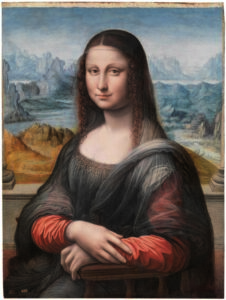
1. The Prado Mona Lisa
This is the most famous early version, located in the Prado Museum (Madrid). It is believed to have been painted by one of Leonardo’s students simultaneously with the master’s work.
Key differences:
- Brighter, warmer colors
- Sharper lines, less sfumato
- A younger appearance
- A slightly altered landscape background
Scientific tests conducted by the Prado and Louvre institutions reveal that both paintings share similar underdrawings—a strong indication that they were created in the same studio environment.
2. The Isleworth Mona Lisa
One of the most controversial versions Mona Lisa, this painting surfaced in the early 20th century and portrays a younger-looking Lisa. Some scholars argue that it may represent an earlier portrait by Leonardo himself, while others strongly dispute its authenticity.
Supporters point to stylistic similarities, while critics reference inconsistencies in technique and materials.
3. The Hermitage Mona Lisa
Housed in Russia’s Hermitage Museum, this version is attributed to an unknown 16th-century Italian painter. While less renowned, it retains many compositional elements of the original.
Modern technology has uncovered several underlying sketches and earlier versions beneath the surface of the original Mona Lisa.
Infrared and Multispectral Analysis
Studies conducted by experts such as the Centre de recherche et de restauration des musées de France have revealed:
- Earlier sketches with altered hand positions
- A different neckline and garment style
- Initial outlines that differ from the final paint layers
These discoveries show that even within the original portrait itself, Leonardo experimented with multiple internal versions before arriving at the masterpiece we know today.
Modern Artistic Interpretations
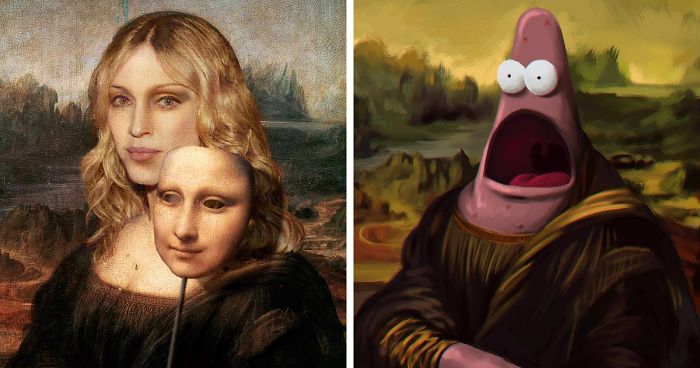
From surrealism to pop art to digital collage, the versions Mona Lisa has been reimagined endlessly. Modern artists reinterpret the work not only for aesthetic reasons but also to explore wider themes such as identity, gender, technology, consumerism, and authority.
1. Marcel Duchamp’s “L.H.O.O.Q.”
The groundbreaking Dadaist version adds a mustache and goatee to a Mona Lisa postcard, challenging concepts of traditional beauty, originality, and artistic authority.
2. Andy Warhol’s Pop Art Mona Lisas
Warhol created repetitive, colorful screen prints showcasing the Mona Lisa as a mass-consumed cultural object—echoing modern discussions of fame and commercialization.
3. Salvador Dalí’s Parodic Versions
Dalí produced several surrealist Mona Lisa interpretations, blending dreamlike imagery with distorted anatomy.
4. Contemporary Digital Art
Today, AI-generated reimaginings, glitch art, NFT versions, and augmented reality reinterpretations continue the tradition of reinventing the Mona Lisa in line with technological evolution.
Mona Lisa in Popular Culture
The versions Mona Lisa has become a global symbol appearing in:
- Advertising campaigns
- Film and television
- Political posters
- Merchandise (posters, mugs, fashion)
- Internet memes
This saturation demonstrates the painting’s unmatched cultural reach. Organizations like the Louvre Museum provide official educational material that tracks the artwork’s influence on global culture.
Why Artists Recreate the Mona Lisa Today
Modern reinterpretations of the Mona Lisa serve purposes such as:
- Social commentary on beauty standards, media, or politics
- Technical mastery through imitation practice
- Exploration of gender, identity, and body image
- Symbolic meaning tied to heritage or national pride
- Humor and satire in memes and pop culture
The versions Mona Lisa phenomenon is as much about cultural dialogue as it is about artistic creativity.
How the Mona Lisa Inspires Creative Study
1. Art Students Use It for Skill Development
Copying the Mona Lisa teaches shading, perspective, facial anatomy, and the sfumato technique.
2. Historians Use Versions to Understand Workshops
The Prado version, for example, offers insight into Leonardo’s studio structure and his students' methods.
3. Psychologists Analyze Its Impact on Perception
Research explores why the expression appears to change depending on distance or lighting.
4. Scientists Study Its Layering and Materials
Advanced scanning reveals pigments, brushwork, and compositional changes.
FAQs About the Different Versions of the Mona Lisa
How many versions of the Mona Lisa exist?
There are dozens of known historical copies, hundreds of artistic reinterpretations, and countless modern creative versions.
Which version is considered closest to Leonardo’s original?
The Prado Mona Lisa is widely considered the closest and most historically significant copy.
Is the Isleworth Mona Lisa authentic?
Scholars remain divided. Some argue it may be an earlier work by Leonardo, while others reject its attribution.
Why is the Mona Lisa copied so often?
Its cultural impact, mystery, and artistic innovation make it a universal symbol, inspiring reinterpretation across eras.
Are new versions still being created?
Yes—digital artists, AI creators, and contemporary painters continue to reinterpret the Mona Lisa today.
The world of versions Mona Lisa is rich, diverse, and endlessly fascinating. From Renaissance studio replicas to avant-garde reinterpretations and digital reinventions, each version contributes to the ongoing evolution of one of humanity’s most iconic artworks. Whether studied for historical insight, artistic inspiration, cultural commentary, or psychological depth, every version helps us better understand why the Mona Lisa continues to captivate the world more than 500 years after its creation.
Artists: The Greatest Artists in History – Lives, Styles, and Influence
How to Find Beauty & Inspiration: 6 Drawing Ideas from Everyday Life
Understanding Perspective in Art: A Beginner’s Guide in 2025
Layering and Glazing: Building Depth Like the Old Masters
The Symbolism of the Mona Lisa: What Her Smile Really Means
Mastering One-Point Perspective Sketch: Techniques, Tips, and Best Practices
Leave a Reply