
Table
- TL;DR
- Introduction: The Art of Critique
- Step 1: Observe Carefully
- Step 2: Understand the Composition
- Step 3: Analyze Color and Light
- Step 4: Examine Technique and Style
- Step 5: Interpret Symbolism and Meaning
- Step 6: Contextualize Historically
- Step 7: Formulate Your Critique
- Step 8: Communicate Your Insights
- FAQs – Art Critique Made Simple
- Conclusion
TL;DR
Analyze a painting like a professional, it involves observing its composition, color, style, and symbolism while considering historical context and the artist’s intent. Understanding these elements helps you appreciate art more deeply, evaluate its emotional impact, and communicate your insights effectively. This guide provides a step-by-step approach for beginners and enthusiasts.
Introduction: The Art of Critique
Art criticism is more than giving opinions—it’s a structured process of understanding and interpreting a painting. Professional critics combine visual analysis, historical knowledge, and emotional response to evaluate works. Learning these skills not only improves appreciation but also develops your eye for detail, creativity, and communication skills.
Whether you’re looking at a Renaissance masterpiece, a modern abstract painting, or a contemporary artwork, the following steps will guide you to analyze like a professional.
Step 1: Observe Carefully
Start with careful observation. Look at the painting without forming judgments. Ask yourself:
- What do I see first?
- What colors dominate the composition?
- How does the light interact with the forms?
- Are there any unusual shapes or patterns?
Take your time. A professional critic often spends hours or days examining a single piece, noting subtle details that casual viewers may overlook.
Step 2: Understand the Composition
Composition refers to the arrangement of elements within a painting. Pay attention to:
- Balance and symmetry: Does the artwork feel stable or dynamic?
- Focal points: Where does your eye go first?
- Lines and shapes: Do they guide your attention or create tension?
- Depth and perspective: How is space represented?
Analyzing composition helps you understand how the artist directs the viewer’s attention and evokes emotion.
Step 3: Analyze Color and Light
Color and light have psychological and symbolic power. When evaluating them:
- Note the color palette (warm, cool, complementary, monochromatic).
- Consider light sources: natural, artificial, or symbolic.
- Observe contrast and harmony: How do colors interact to convey mood?
- Reflect on emotional impact: Does the color evoke calm, excitement, tension, or melancholy?
Colors can reveal the artist’s intent, cultural references, and thematic emphasis.
Step 4: Examine Technique and Style
Technique is the physical execution of the painting, while style refers to the distinctive artistic approach. Consider:
- Brushstrokes: smooth, textured, expressive, or precise?
- Medium: oil, acrylic, watercolor, mixed media?
- Style: realism, impressionism, abstract, cubism?
- Mastery: Does the technique enhance the message or aesthetic?
Understanding technique and style helps you recognize artistic innovation and skill.
Step 5: Interpret Symbolism and Meaning
Many paintings carry hidden meanings or symbolism:
- Look for recurrent motifs or objects (flowers, animals, gestures).
- Consider historical or cultural context (mythology, religion, social commentary).
- Reflect on emotional or narrative content: What story does the painting tell?
- Ask how the artist’s background may have influenced the work.
Symbolism adds depth and intellectual engagement to your critique.
Step 6: Contextualize Historically
Every painting exists in a historical, cultural, and artistic context. Explore:
- The artist’s life and influences.
- Art movement or period (Renaissance, Baroque, Impressionism, Modernism).
- Societal or political events influencing the work.
Contextual understanding allows you to evaluate significance and innovation rather than just aesthetic appeal.
Step 7: Formulate Your Critique
Combine your observations into a structured critique:
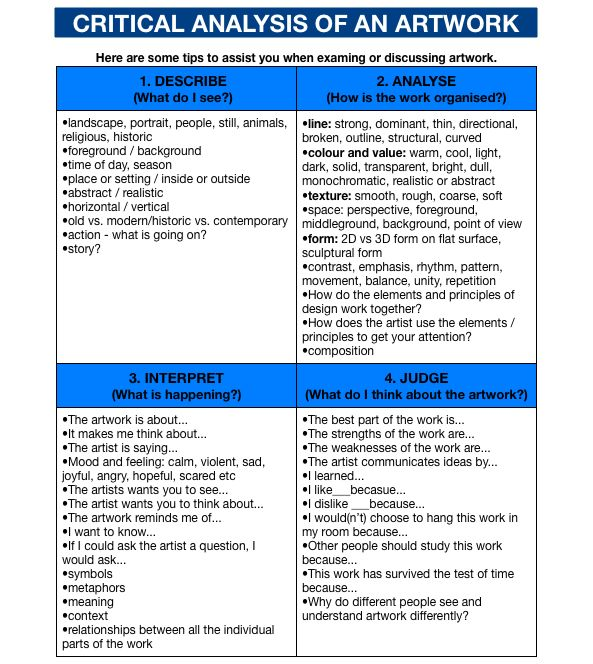
- Description: Objectively describe what you see.
- Analysis: Discuss composition, color, technique, and symbolism.
- Interpretation: Provide insights into meaning, context, and intent.
- Evaluation: Assess impact, effectiveness, and contribution to art.
Your critique should be balanced, thoughtful, and evidence-based, avoiding purely subjective opinions.
Step 8: Communicate Your Insights
A professional critic also shares their analysis effectively:
- Write clear, engaging, and jargon-free text.
- Use examples from the painting to support points.
- Include references to history, technique, or similar artworks.
- Consider multimedia: images, close-ups, and diagrams to illustrate observations.
FAQs – Art Critique Made Simple
Q1: Do I need formal training to analyze art?
No. While training helps, careful observation and structured methodology are sufficient to start.
Q2: How long should I spend analyzing a painting?
Take as much time as needed. Some critiques can take minutes; in-depth professional analysis may take hours.
Q3: Can analyzing art improve my own artwork?
Absolutely. Understanding composition, technique, and symbolism improves both skill and creativity.
Q4: Should personal preference influence critique?
Personal taste is natural but should not overshadow objective analysis. Balance subjective and objective evaluation.
Q5: How do I interpret abstract art?
Focus on composition, color, technique, emotion, and context rather than literal representation.
Conclusion
Analyzing a painting like a professional critic combines careful observation, technical understanding, historical context, and emotional interpretation. By following these steps, you can unlock deeper appreciation, enhance your art knowledge, and communicate insights effectively.
At Artistic Designers, we aim to guide enthusiasts and professionals alike in developing critical skills that make art more meaningful and engaging.
Art History: A Complete Timeline of Art Movements from Renaissance to Modern Art
9 Common Mistakes in Perspective (and How to Fix Them)
Layering and Glazing: Building Depth Like the Old Masters
Famous Paintings: Exploring Iconic Artworks and Their Stories

Eroticism in Art: Schiele, Dalí & Picasso

Banksy: His Art, Style, Cultural Impact, and Legacy
Leave a Reply